TEACHING
Physics you can pick up with your hands. I turned Newton's laws, heat, energy, and circuits into camps, challenges, and interactive lessons that rewarded understanding over memory.
Deep understanding cannot be handed over
Standing at the front and talking is the easy part. The hard part is deep understanding, and you cannot pour it into anyone.
A student can memorise every formula and still miss how it connects. Memorised facts sit side by side like isolated dots. Real understanding is the web of links firing between them, and that web grows slowly, differently for each student, and it is easily faked by a good memory.
So I stopped testing recall and started designing for connection. Everything that follows, the camps, the work-exams, the interactive notes, was a creative answer to one question: how do you get students to build the links themselves, and then defend them out loud?
"I learned very early the difference between knowing the name of something and knowing something."— Richard P. Feynman
Photos from the floor
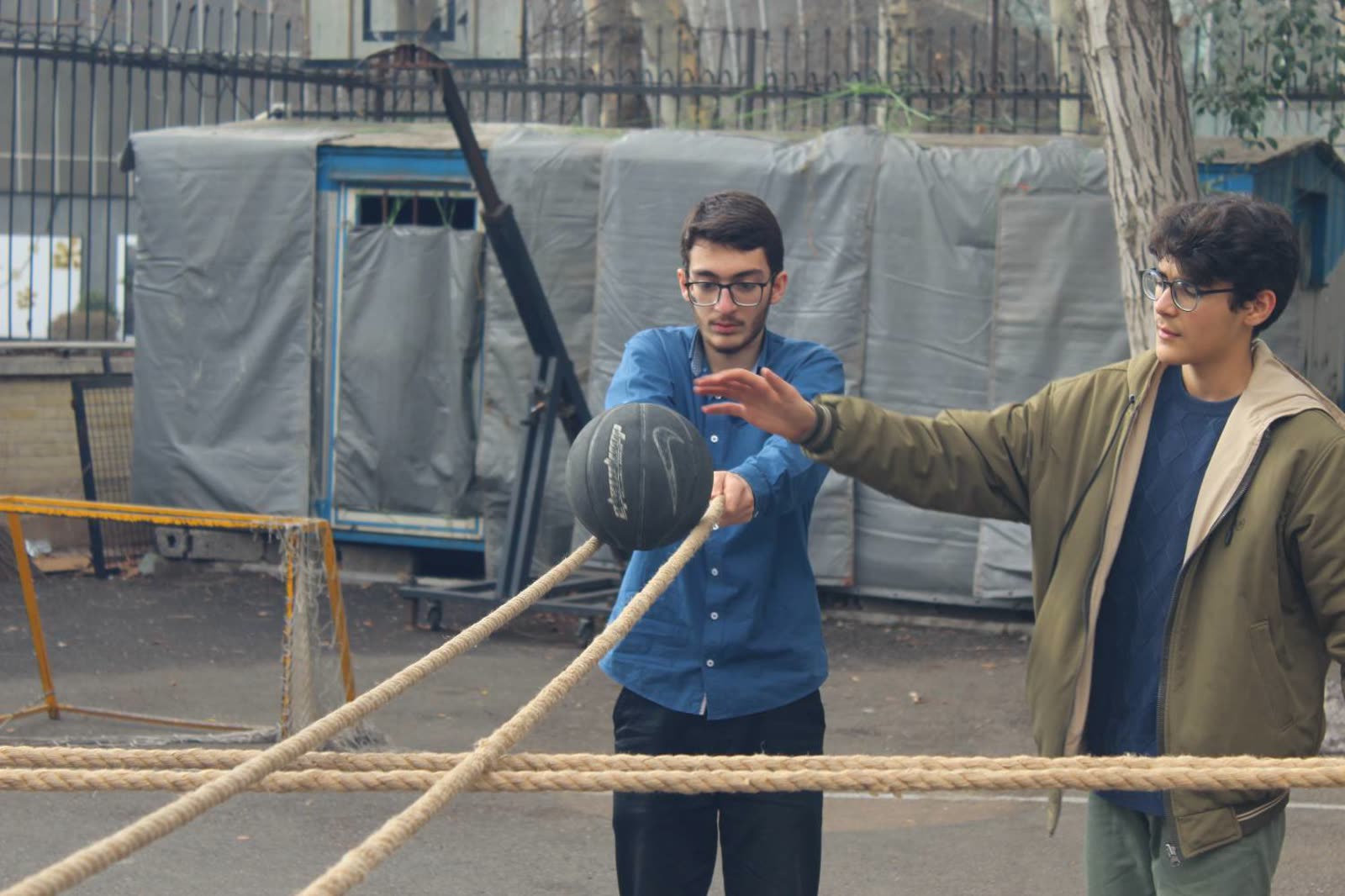
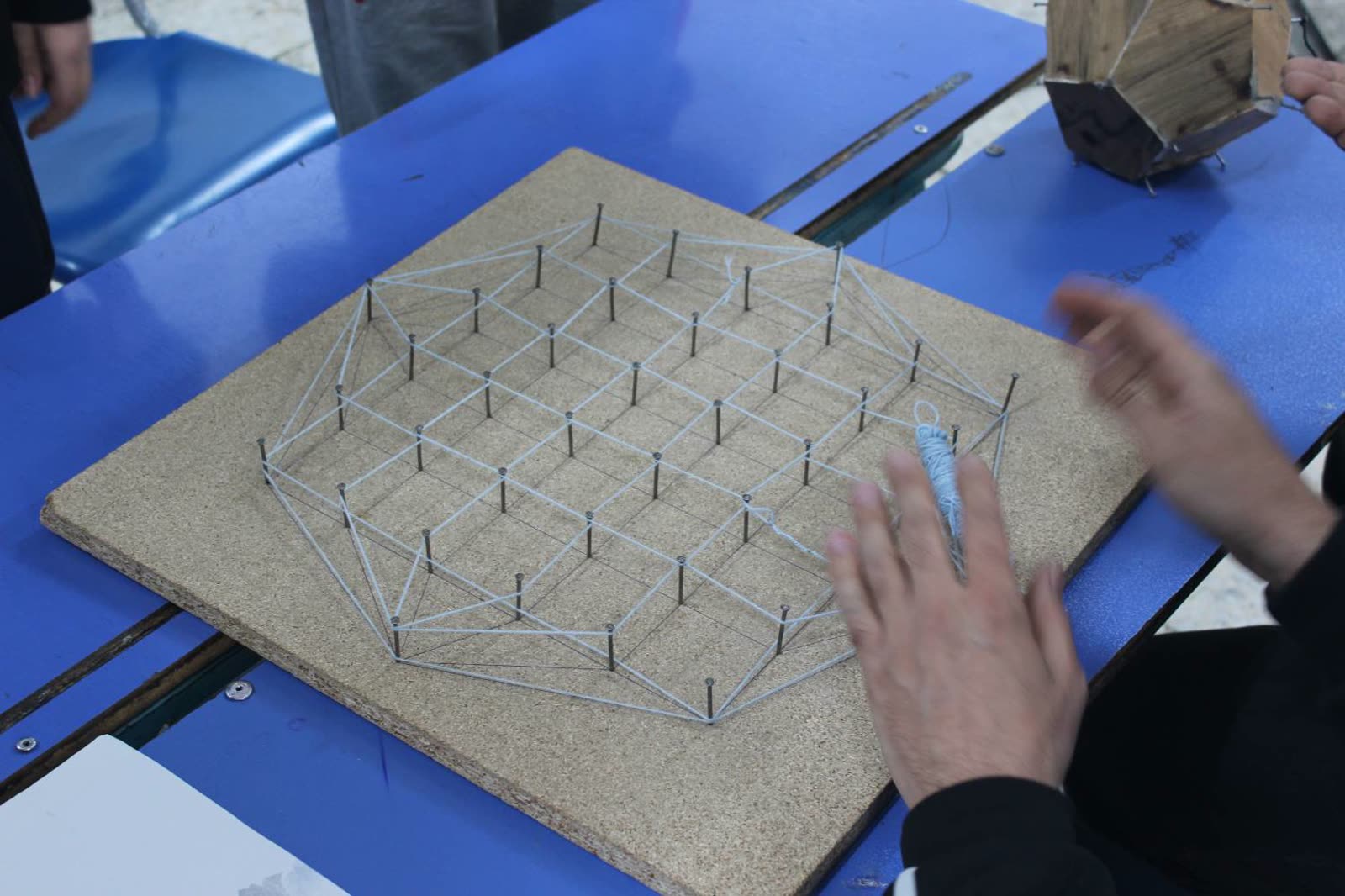
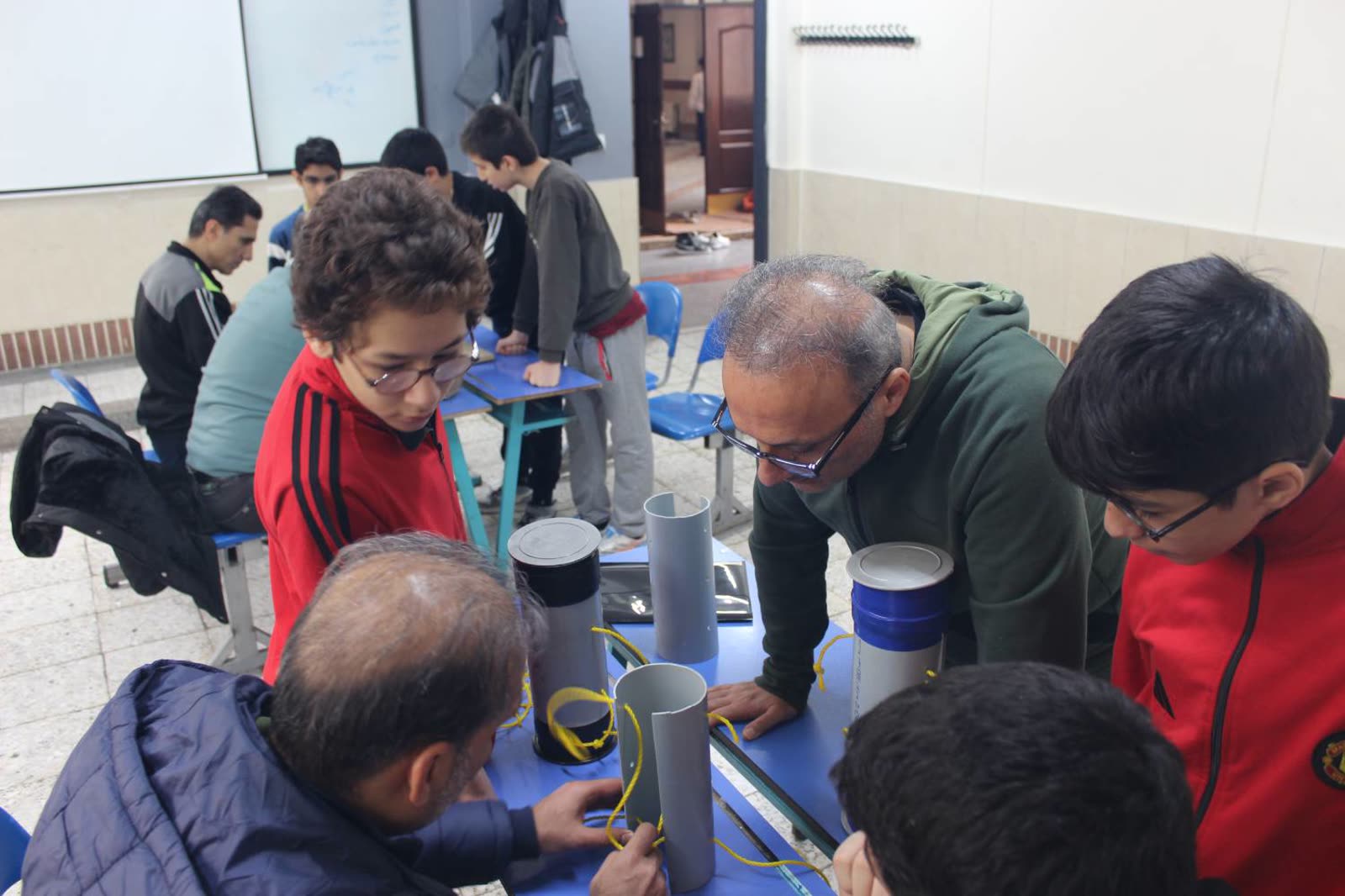
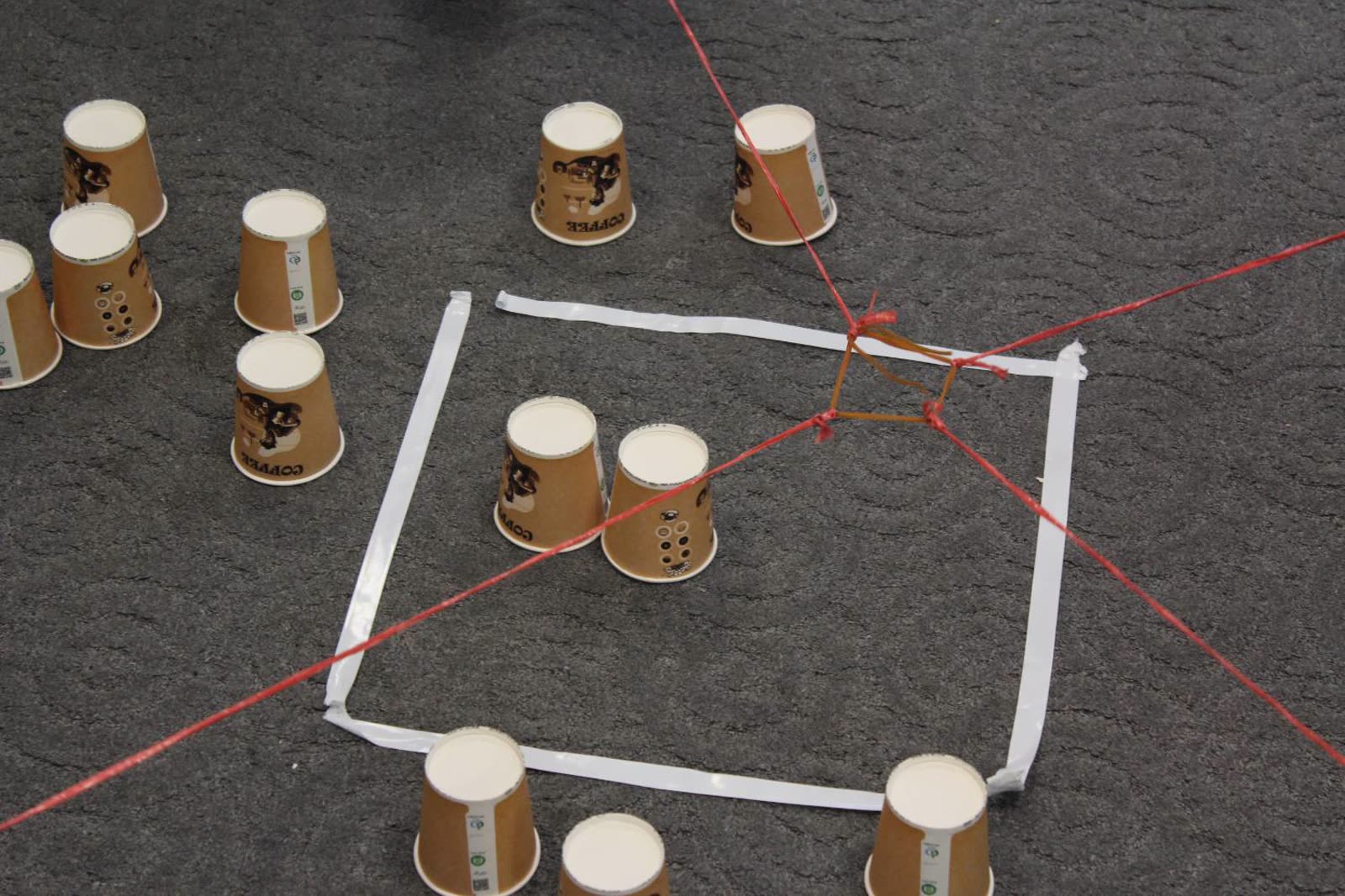
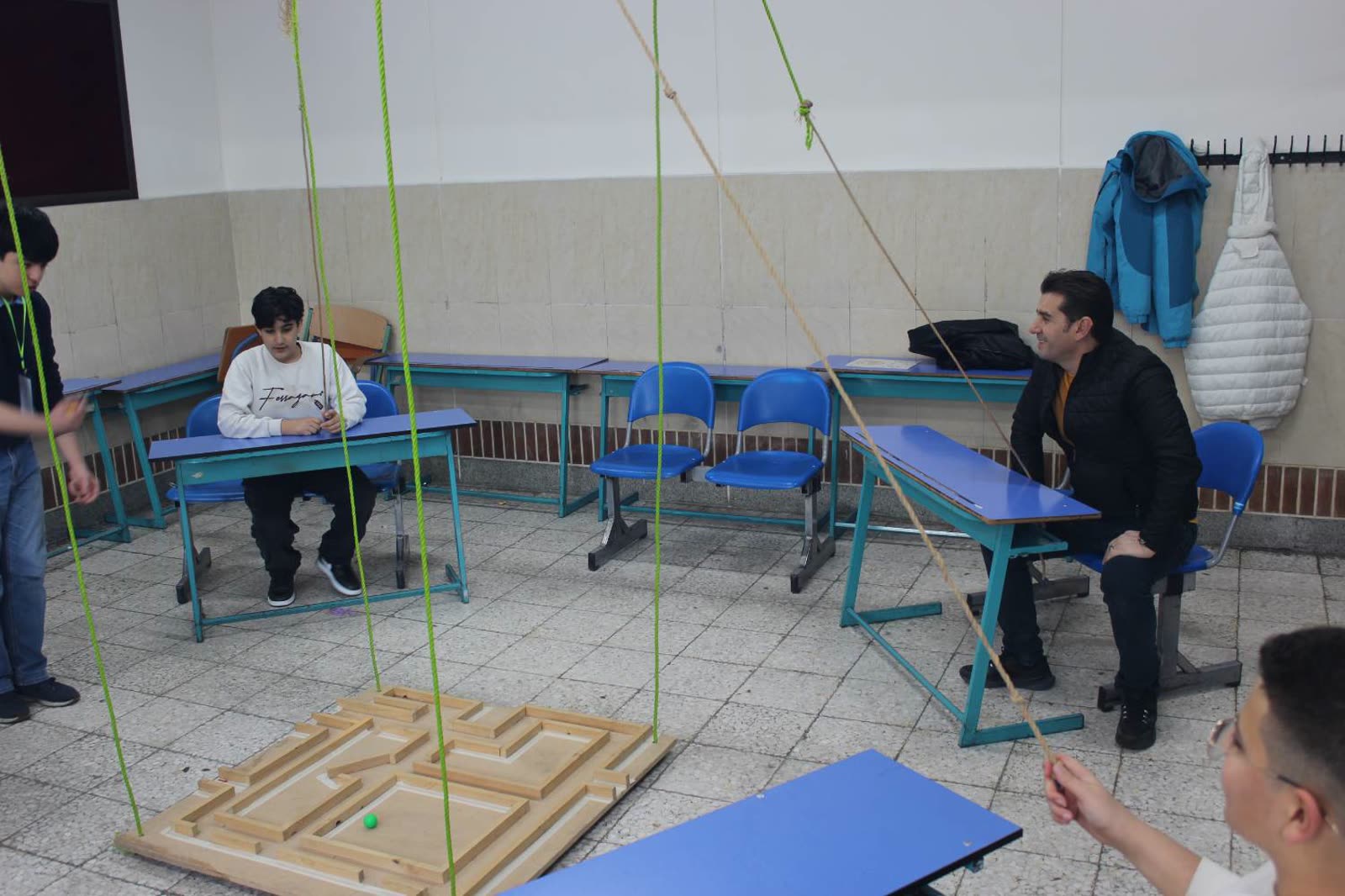
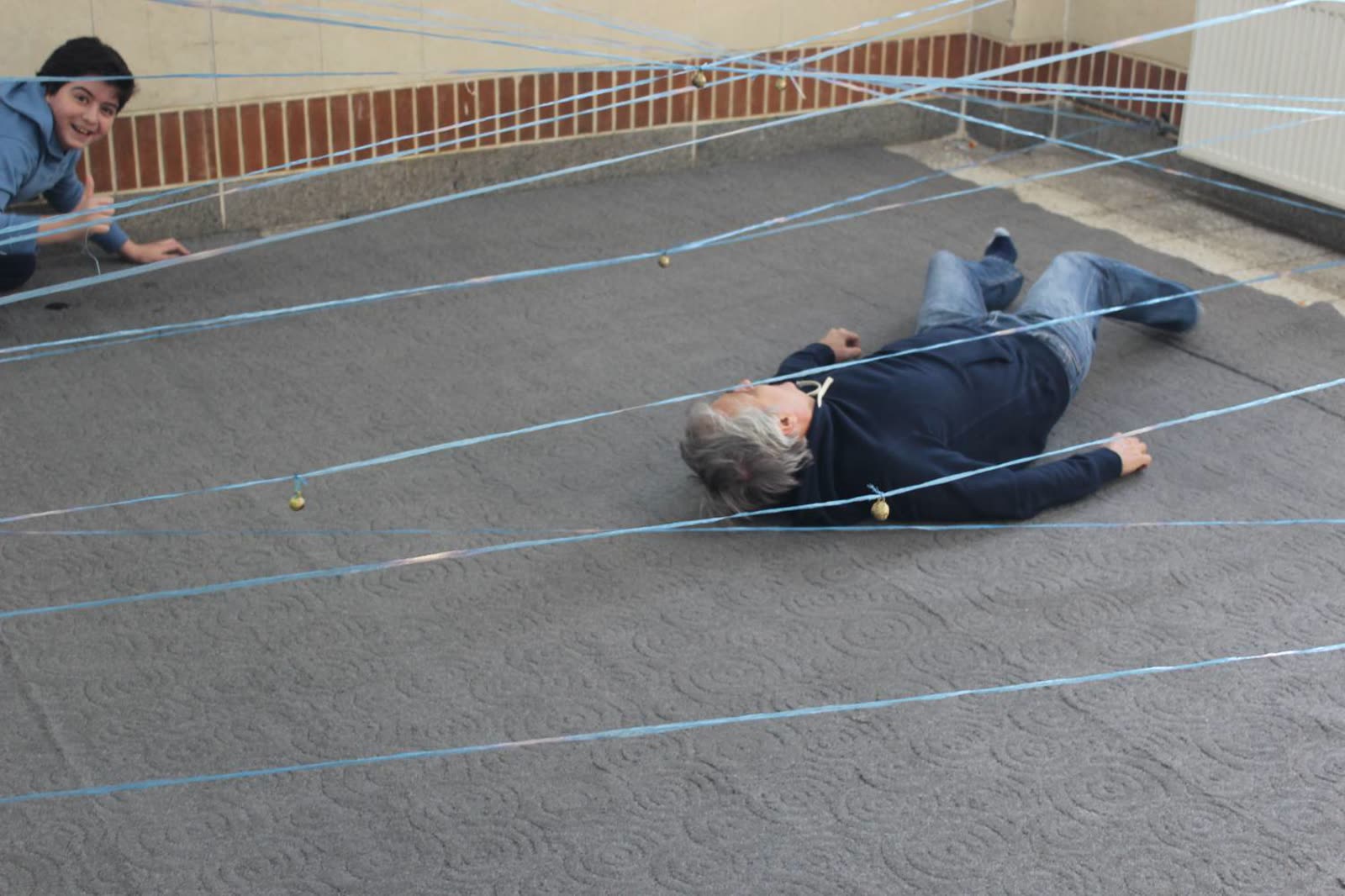
The camps and work-exams in motion: students, and often their families, arguing with physics using their hands instead of their memory.
A lesson on forces you could feel in your arms
On paper it was Newton's laws and vector addition. In the room it looked nothing like a lesson.
Teams held a load steady with ropes, and often their own parents pulled alongside them. A knot only stays still when the forces cancel, so Σ F = 0 stopped being a line in a book and became an argument you settled with your hands.
Watch the ropes flatten out. The weight never changes, yet the tension in every rope climbs and climbs. Students met that the hard way, then they could explain exactly why a tightrope is never truly horizontal.
One marble, four ropes, a whole team
In one station a marble sat on a board hung in the air, and each side of the board was held by a different member of the team.
To move the marble one step, four people had to agree on how hard to pull and when to let go. Tilt too far and it rolls straight past the hole. It was cooperation, timing, and feedback control, disguised as a game that parents and children lost together and laughed about.
If a student can build it, argue for it, and explain it, they cannot fake it.
Keep your water hotter than everyone else
Alongside the ordinary written test we ran a second kind of exam we called Kārāzmun, a work-exam. Instead of repeating facts, students got a problem tied to the topic and built their way out.
For heat transfer, each team got a cup of near-boiling water and a small, fixed set of materials. The goal was easy to state and hard to win: after the timer, keep your water warmer than every rival.
The winning design was rarely the most expensive one. It was the one whose owner could stand up and explain exactly why it slowed the heat escaping. Drag the insulation slider and watch the gap open.
Build a machine, then read it back to me
For energy conversion, teams built Rube Goldberg machines, long and deliberately over-complicated chains, then narrated their own machine step by step.
At every stage they named where kinetic energy became potential energy and back again. A ball at the top of a ramp is stored energy waiting to happen. The same ball at the bottom is pure motion. Nothing is lost, it only changes form.
Grab the ball, lift it, and let go. The two bars trade places as it falls and bounces, yet their sum never moves. That single picture did more than a page of definitions ever could.
An escape room wired with Ohm's law
To get out, a team had to crack a sealed black box with three terminals and a hidden web of resistors inside. No opening it. Only a battery and a meter at the edges.
So they did what engineers do: they probed it. Measure across A and B, then B and C, then C and A. Each reading mixes the hidden resistors differently, because current always sneaks around through the third terminal. Three measurements, three equations, exactly enough to pin down three unknowns.
From the readings they solved backwards for every resistor, built a matching network, and checked it behaved identically. Only then did the door open. Press reveal to see what was hiding.
Estimating the world with nothing but your own body
Away from the events, I wrote the material students actually read: notes, activities, and full lessons built for deep understanding instead of memorising.
The estimation booklet teaches you to size up almost anything with reference points you already carry: the width of your hand, your own height, the ten seconds it takes to count 1001 to 1010. One favourite question gives students only the diameter and depth of this open-pit mine and asks how long it took to dig.
No formula is handed over. You approximate the pit as a cone, plug in the numbers, and reach two hundred million cubic metres of earth, then reason your way to years of digging. The point was never a precise number. It was the confidence to reach one, and defend it out loud.
Distance is not displacement
A lot of the material was interactive, built to be played with rather than read. Here is one small piece, rebuilt for the web.
Drag the walker around the grid. The dashed blue line is the distance you travel. The straight arrow is your displacement. Make them equal, then make the distance twice the displacement, then loop back to the start and watch the displacement fall to zero while the distance keeps climbing.
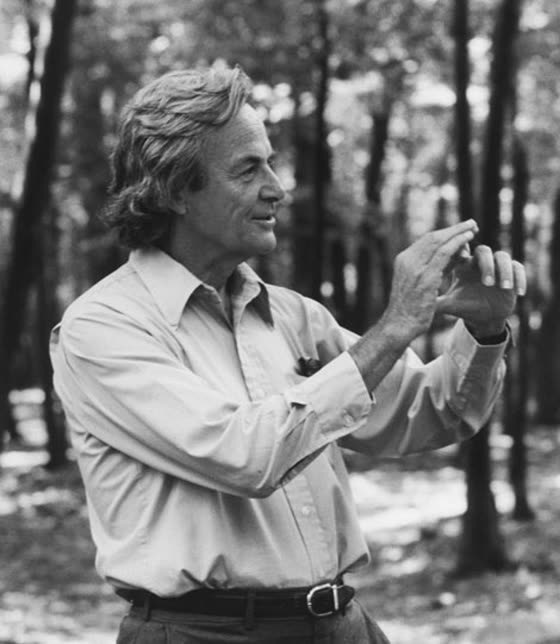
What I cannot create, I do not understand.
Feynman kept that line on his blackboard. It is the same test I set every student: if you can build the thing, explain it, and defend it, the idea is truly yours.
If a student can build it, argue for it, and explain it, they understand it. Every camp, every work-exam, and every page of notes was designed toward that one line.
The interactive pieces above are the same idea in miniature, and they are exactly the kind of tool I now build full time.